Ask informed questions
Revisit history, goals, prior findings, and other information the clinician has chosen to store in the profile.
MySLP helps you work with the clinical information already in EASI—to ask better questions, prepare documentation, plan therapy, create materials, and keep a difficult schedule moving.
It helps you notice and prepare. You interpret and decide.
Get EASI with MySLP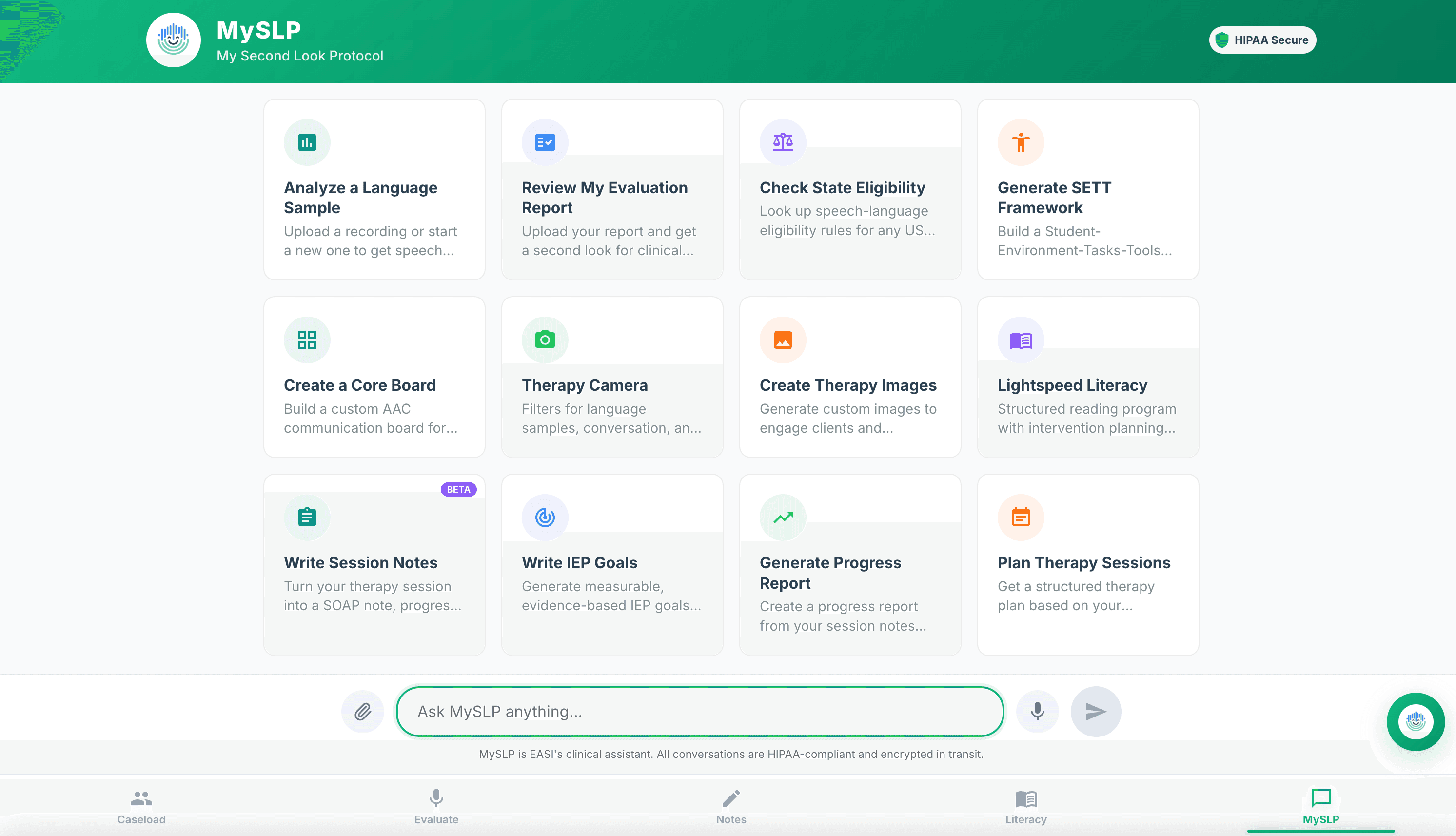
Useful between evaluations
Revisit history, goals, prior findings, and other information the clinician has chosen to store in the profile.
Check whether a draft reflects the evidence and identify gaps or language that deserves closer clinician attention.
Bring dated therapy notes, goals, and evidence together in a progress-report draft for clinician review.
Prepare session ideas and use structured literacy supports that can be adapted to the person and setting.
Generate core boards, picture cards, story sequences, minimal pairs, and other image-based materials.
Build around service requirements so caseload scheduling is part of the clinical workflow, not a separate spreadsheet puzzle.
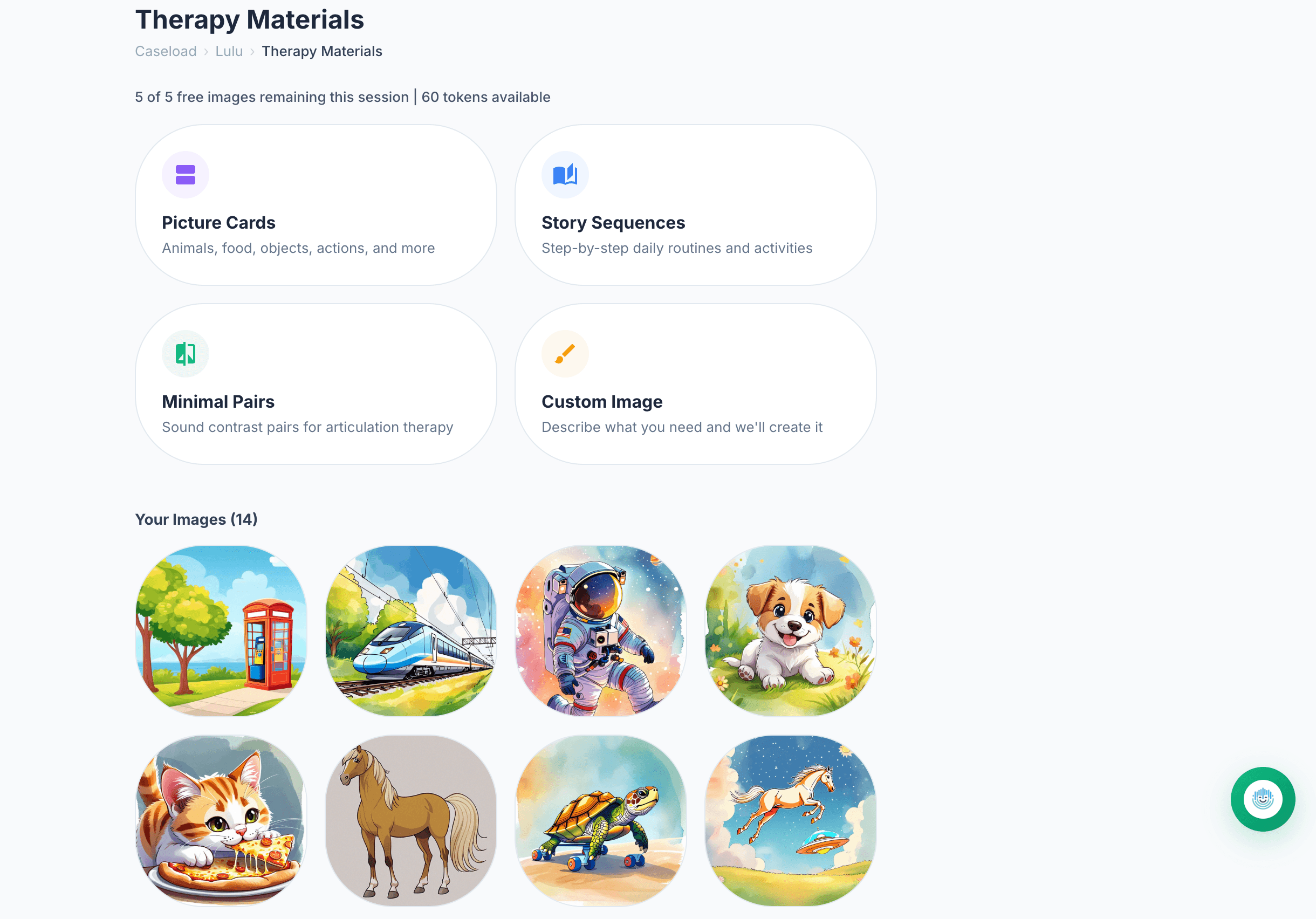
A plan can lead to a core board. A therapy target can lead to picture cards. Dated notes can lead to a progress-report draft. MySLP helps move from the question to a practical next step without separating that work from the patient or student record.
The clinician remains the safeguard.
Review every suggestion and generated material for accuracy, fit, accessibility, cultural and linguistic relevance, and clinical appropriateness.